
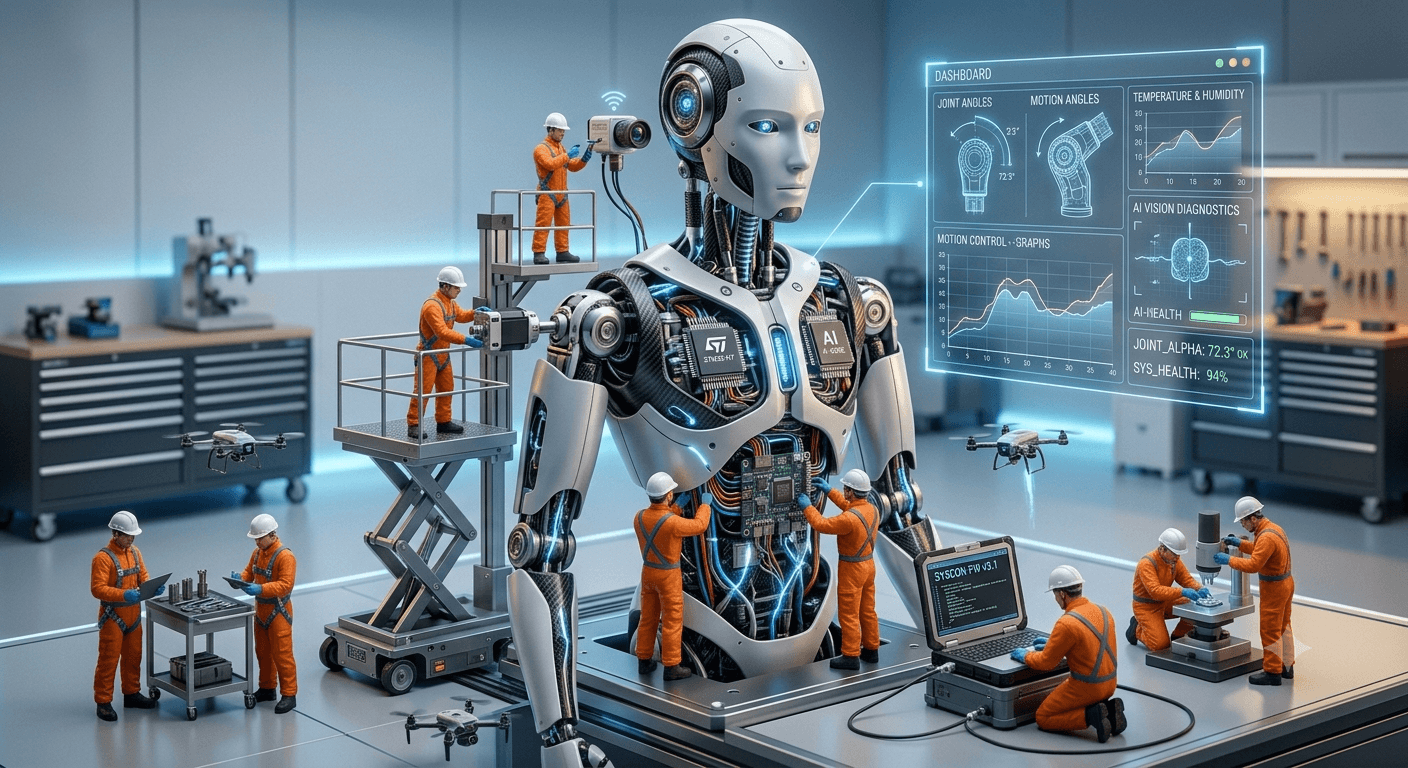
Technology is changing how students learn, experiment and prepare for the future. Robotics, coding, the Internet of Things (IoT) and embedded systems are helping learners understand how technology works through practical projects and real-world applications.
For schools, colleges and students in Indore, robotics and STEM education can provide an opportunity to move beyond theoretical learning and explore programming, electronics, automation and problem-solving.
GenixoTech is a technology education and digital solutions company working across Robotics & Education and GenixoTech Digital. Our Robotics & Education vertical focuses on practical technology learning, including robotics, programming, IoT, embedded systems and workshops for learners and educational institutions.
In this guide, we explain what robotics and IoT training involves, what students can learn, how schools can introduce practical STEM activities and how to choose a suitable technology training programme.
What Is Robotics Training?
Robotics training teaches learners how to design, program, assemble and test robots using electronic components, sensors, motors and programming logic.
A typical beginner project might involve building a robot that detects obstacles and changes direction automatically. To complete the project, students need to understand how sensors collect information, how a controller processes that information and how motors respond to programmed instructions.
Robotics combines several technical disciplines, including:
Programming and computational thinking
Electronics and electrical circuits
Sensors, actuators and motor control
Microcontrollers and embedded systems
Mechanical design and assembly
Testing, debugging and problem-solving
By working on practical projects, students can see how individual components combine to create a functioning system.
Why Is Robotics and STEM Education Important for Students?
STEM stands for Science, Technology, Engineering and Mathematics. STEM education encourages learners to understand concepts through experimentation, investigation, design and problem-solving.
Robotics can make these concepts more tangible because students can observe the results of their programming and engineering decisions.
For example, a student building a line-following robot must understand sensor readings, motor behaviour and the logic needed to keep the robot on a path. If the robot fails to follow the line, the student can test the circuit, examine the code and improve the design.
Practical learning can help students develop several useful skills:
1. Logical thinking: Students learn to break a complex task into smaller steps and create instructions to solve it.
2. Problem-solving: Building and testing projects helps learners identify errors and evaluate different solutions.
3. Creativity: Students can modify existing projects or design their own solutions to specific challenges.
4. Technical confidence: Working with hardware and code gives students experience applying classroom concepts.
5. Collaboration: Team projects can encourage students to communicate ideas, divide responsibilities and work towards a shared outcome.
Robotics is not limited to students who already know programming. Beginner-friendly projects can introduce fundamental concepts gradually, while advanced projects can challenge learners who have previous experience.
What Is the Difference Between Robotics, IoT and Embedded Systems?
Robotics, the Internet of Things and embedded systems are related fields, but each has a different purpose.
Robotics
Robotics involves designing and controlling machines that perform programmed actions. A robot may use sensors, motors, mechanical components and software to interact with its environment.
Examples include obstacle-avoiding robots, line-following robots and robotic arms.
Internet of Things (IoT)
The Internet of Things connects compatible physical devices so they can collect, transmit and exchange data. Depending on the design, connected devices can also support remote monitoring, alerts and automated responses.
For example, a temperature-monitoring system can use a sensor to collect readings and send them to a dashboard.
Embedded Systems
An embedded system combines hardware and software to perform a specific function within a larger device or product.
Examples include a microcontroller-based motor controller, a digital temperature monitor and an automated lighting controller.
These technologies often work together. A robotics project may use an embedded controller to read sensors, while an IoT connection sends selected information to a remote dashboard.
Understanding these connections helps students see how individual technical concepts contribute to larger engineering systems.
What Do Students Learn in a Robotics Workshop?
A robotics workshop introduces students to practical technology concepts through demonstrations, guided activities and project work.
The exact syllabus depends on the students' age, previous experience, available equipment and the workshop's duration.
A beginner-friendly programme may cover the following topics.
1. Introduction to Robotics and STEM
Students explore what robots are, how they operate and where robotics is used in everyday life and industry.
2. Basic Electronics
Learners become familiar with electronic components, circuits, connections, power supplies and safe equipment handling.
3. Programming Fundamentals
Students learn how instructions, conditions, loops and logical decisions control the behaviour of a device.
4. Sensors and Motors
Learners explore how sensors detect changes in their surroundings and how motors produce movement.
5. Microcontrollers and Embedded Systems
Depending on the programme level, students may work with programmable controllers to process inputs and control outputs.
6. Practical Project Development
Students combine the concepts they have learned to assemble, program, test and improve a working project.
A project-based approach allows students to understand not just what a component does, but also how it contributes to the overall system.
Examples of Robotics and IoT Projects for Students
Practical projects are an effective way to introduce engineering concepts. The appropriate project depends on the learner's age, experience and available equipment.
Obstacle-Avoiding Robot
An obstacle-avoiding robot uses distance sensors and programmed logic to detect objects and change direction. Students explore sensor integration, conditional statements and motor control.
Line-Following Robot
A line-following robot uses sensors to detect a path and adjusts its motors to follow it. The project introduces sensor readings, control logic and debugging.
Smart Temperature Monitoring System
A temperature sensor collects readings that can be displayed on a screen or dashboard. With suitable hardware and connectivity, the system can also send alerts when readings cross a defined threshold.
Automatic Lighting System
A light sensor or other suitable input can control a lighting circuit according to predefined conditions. Students learn about inputs, outputs and automation logic.
IoT Monitoring Dashboard
A connected device collects data and transmits it to a dashboard for monitoring. This introduces students to device connectivity, data handling and basic system architecture.
These examples can be adapted for school activities, college demonstrations or more advanced engineering projects.
How Can Schools Introduce Robotics Education?
Schools can introduce robotics through structured workshops, practical STEM activities, project-based learning and dedicated robotics laboratory facilities.
The right approach depends on the school's objectives, student age groups, available space, budget and curriculum requirements.
Start With Clear Learning Objectives
Decide whether the programme should introduce basic STEM concepts, teach programming fundamentals, develop engineering projects or prepare students for more advanced technical learning.
Select Age-Appropriate Activities
Younger learners may benefit from introductory activities and simple robotics kits. Older students can explore programming, sensors, microcontrollers and more complex projects as their skills develop.
Plan Practical Sessions
Students need opportunities to assemble components, write code, test their designs and troubleshoot problems. A workshop should provide sufficient time for hands-on participation rather than relying entirely on presentations.
Evaluate Robotics Lab Requirements
Schools interested in a dedicated robotics laboratory should consider the number of students, equipment requirements, available space, safety arrangements, storage, maintenance and teacher training.
A robotics lab can be planned according to the institution's requirements instead of relying on a single standard setup for every school.
Review Learning Outcomes
Teachers can evaluate student understanding through project demonstrations, practical tasks, explanations of working principles and the ability to identify and resolve errors.
Educational institutions in Indore looking to introduce robotics can discuss their objectives, student groups and infrastructure requirements with GenixoTech.
How to Choose a Robotics Training Programme in Indore
Before enrolling students or selecting a workshop provider, schools, colleges and parents should evaluate the programme carefully.
Consider these factors:
Practical learning: Does the programme include hands-on activities and project development?
Suitable syllabus: Does the content match the students' age, knowledge and learning objectives?
Equipment and tools: Are the components and learning resources appropriate for the planned activities?
Instructor support: Can learners receive guidance when they encounter technical problems?
Project outcomes: Will students have opportunities to demonstrate and explain what they have built?
Programme flexibility: Can the syllabus be adapted to the institution's requirements?
Infrastructure planning: For a robotics lab, are equipment, maintenance and training needs clearly defined?
For schools and colleges, it is also useful to clarify the programme duration, expected number of participants, materials required and the responsibilities of the institution and training provider.
Choosing a programme based on these practical considerations can help ensure that technology activities align with educational goals.
Robotics Workshops and Technology Education at GenixoTech
GenixoTech works across Robotics & Education and GenixoTech Digital, connecting practical technology learning with digital problem-solving.
Our Robotics & Education vertical focuses on technology learning areas such as robotics, STEM, programming, IoT, embedded systems, workshops and practical projects.
We also work with educational institutions interested in robotics workshops and robotics laboratory setups planned according to their requirements.
The appropriate programme depends on the students' experience, learning objectives, available infrastructure and project needs.
For schools and colleges, the first step is to identify the intended student group, the skills they should develop and the kind of practical experience the institution wants to provide.
Interested in robotics workshops, STEM education or a robotics lab for your institution? Contact GenixoTech to discuss your requirements and explore a suitable approach.
Frequently Asked Questions About Robotics Training in Indore
1. What is the best age to start learning robotics?
Students can begin exploring age-appropriate robotics activities during their school years. The best starting point depends on their interests, developmental stage and familiarity with technology. Beginners can start with simple activities before progressing to programming and electronics.
2. Do students need programming knowledge before joining a robotics workshop?
Not necessarily. Beginner programmes can introduce programming concepts as part of the robotics activities. More advanced workshops may require prior experience, so students should check the programme's prerequisites.
3. What programming languages are used in robotics?
The language depends on the hardware and project. C and C++, Python and visual programming tools are commonly used in different robotics and embedded-system learning environments. The appropriate choice depends on the learners' level and the intended project.
4. What is taught in an IoT training programme?
An IoT programme may cover sensors, microcontrollers, device connectivity, data collection, communication protocols and dashboards. Advanced programmes may also introduce cloud platforms, security and remote monitoring.
5. Can schools arrange customised robotics workshops?
Yes, workshop formats can be planned around an institution's learning objectives, student age groups, available infrastructure and preferred duration. Schools should discuss these requirements with the training provider before finalising a programme.
6. Can a robotics lab be set up according to a school's requirements?
A robotics laboratory can be planned around the school's available space, budget, student capacity, equipment requirements and intended activities. The final design should also consider safety, storage, maintenance and teacher training.
7. What is the difference between a robotics workshop and a robotics lab?
A robotics workshop is generally a learning activity conducted over a defined period, while a robotics lab is a dedicated environment with equipment and resources for ongoing practical learning. A school may begin with workshops before deciding whether a permanent lab is appropriate.
8. Is robotics useful for engineering college students?
Robotics can help engineering students apply programming, electronics, control systems and embedded-system concepts through projects. The depth of learning depends on the programme and the student's existing technical knowledge.
9. How can schools or colleges enquire about robotics training in Indore?
Educational institutions can contact GenixoTech through its website to discuss their student groups, learning objectives, workshop requirements or robotics laboratory plans.
Conclusion
Robotics, coding, IoT and embedded systems offer students opportunities to understand technology by building and testing practical projects. For schools and colleges, structured workshops and well-planned laboratory activities can complement classroom learning and introduce students to engineering concepts.
The most effective learning experience begins with clear objectives, appropriate equipment, guided practice and opportunities to solve real problems.
Whether an institution wants to introduce robotics to beginners, organise a student workshop or explore a dedicated robotics laboratory, planning around its educational requirements is an important first step.
Learn. Build. Innovate.
Explore Technology Learning With GenixoTech
Are you a school owner, college representative, teacher, parent or student interested in robotics and technology education?
Visit GenixoTech to explore our offerings and contact our team to discuss your requirements.
Let's make practical technology learning more accessible through robotics, programming and innovation.