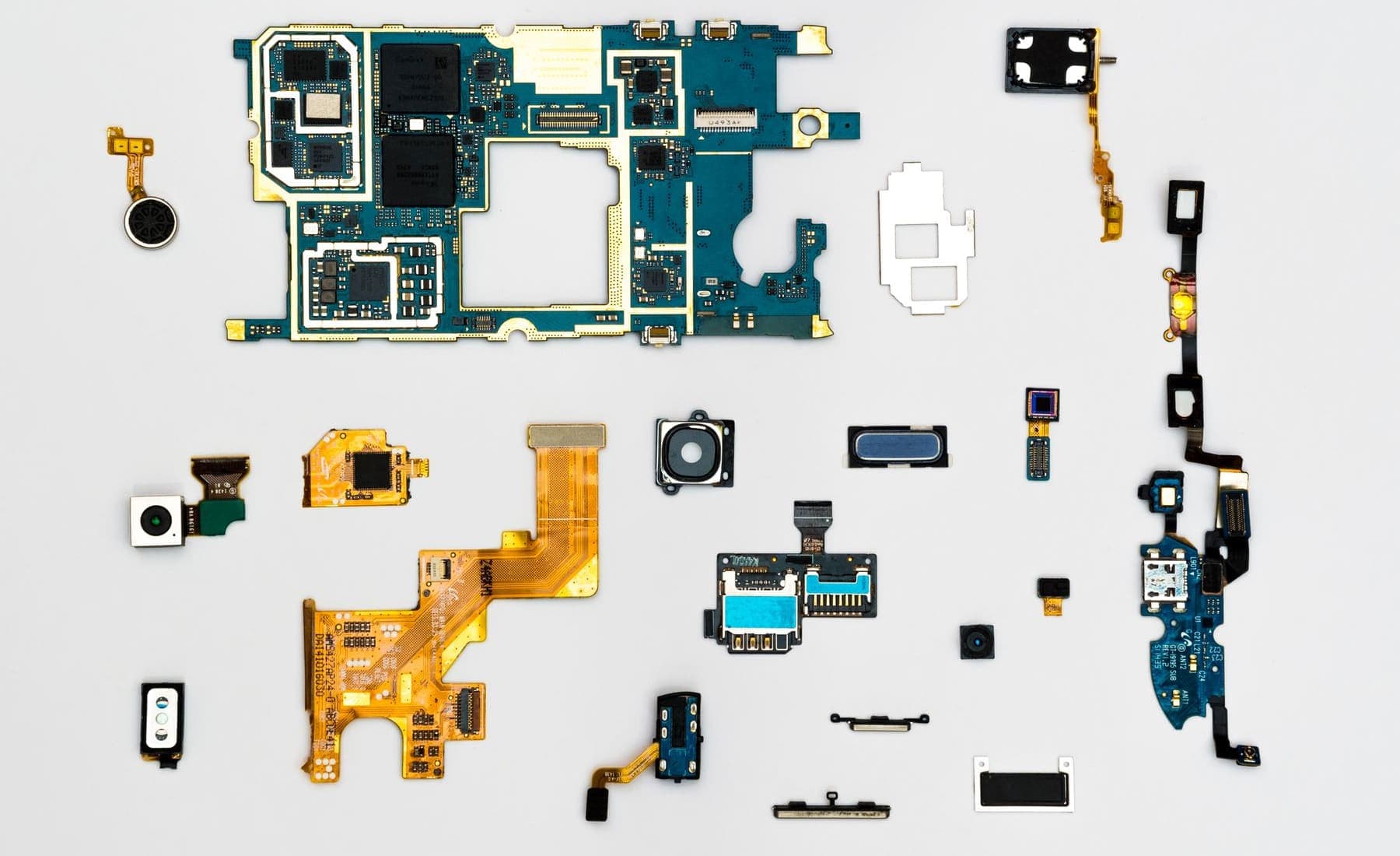
Embedded systems training with microcontroller boards and circuits

Career Program • Indore

Embedded Systems Engineer Program

6-month embedded career accelerator with internship & placement assistance.

Learn C programming, Embedded C, Linux, 8051, AVR, ARM, RTOS, PCB design, networking and IoT — and build real industry projects with expert mentorship.

  • Real Hardware Practice
  • Industry Recognized Certification
  • Expert Mentorship
  • GitHub Portfolio Development
  • Resume & Interview Preparation

India’s most practical embedded path

A 6-month embedded course built around 80% hands-on practice.

Experience a practical training path designed to match global technology standards — from your first line of C to an ARM-based product and a placement-ready portfolio.

Real hardware practice on 8051, AVR, PIC and ARM
Linux system programming and networking
PCB design, fabrication and soldering
IoT, cloud integration and smart systems

Week-wise roadmap

24 weeks at a glance.

See exactly which module runs when, and the outcome you walk away with.

Module focusExpected outcome
01Programming FoundationW1–4
W1–4
Strong C & Data Structures
02Linux ProgrammingW5–7
W5–7
Linux & System Programming
03Embedded C & 8051W8–11
W8–11
Hardware Programming
04C++ ProgrammingW12–13
W12–13
OOP & Software Design
05NetworkingW14–15
W14–15
TCP/IP & Socket Programming
06PIC / AVRW16–17
W16–17
Advanced Microcontrollers
07ARM CortexW18–20
W18–20
Industry Embedded Development
08Advanced Embedded TechW21
W21
Wireless & Industrial Interfaces
09IoT SystemsW22
W22
Connected Devices & Cloud Basics
10Major Project & PlacementW23–24
W23–24
Portfolio & Career Readiness

Curated learning journey

10 career modules. One connected path.

Open any module to see every topic, lab and assessment inside it.

01
Weeks 1–4

Programming Foundation

“Strong programmers become great embedded engineers.”

C Programming

  • Introduction to Embedded Systems
  • Fundamentals of C
  • Operators
  • Decision Making
  • Loops (for, do while, while)
  • Functions
  • Arrays
  • Strings
  • Pointers
  • Storage Classes
  • Structures
  • Unions
  • Enums
  • Dynamic Memory Allocation
  • Command Line Arguments
  • Bitwise Programming
  • Macros
  • Pragmas
  • File Handling
  • Multi-file Programming
  • Make Utility
  • Searching & Sorting

Data Structures

  • Linked List
  • Doubly Linked List
  • Trees
  • Weekly Coding Practice
  • Mini Projects
  • Module Assessment
02
Weeks 5–7

Linux System Programming

Linux Fundamentals

  • Linux Architecture
  • Kernel
  • Shell
  • Services
  • System Calls
  • Error Handling

Linux Programming

  • File System
  • Process Management
  • Threads
  • Memory Management
  • IPC
  • Pipes
  • FIFO
  • Message Queue
  • Shared Memory

Advanced Linux

  • Static Libraries
  • Dynamic Libraries
  • Shell Scripting
  • Linux Practical Lab
  • System Programming Assignments
03
Weeks 8–11

Embedded C & 8051 Microcontroller

Embedded Programming

  • Embedded C
  • Assembly Basics

8051 Architecture

  • Timers
  • Counters
  • UART
  • Interrupts
  • GPIO

Hardware Interface

  • LEDs
  • LCD
  • Motors
  • Sensors
  • Relays
  • Keypad
  • Buzzer

Communication Protocols

  • UART
  • I2C
  • SPI

PCB Design

  • Eagle CAD
  • PCB Fabrication
  • Testing
  • Soldering
  • Embedded Mini Project
04
Weeks 12–13

Object Oriented Programming with C++

Core C++ & Software Design

  • OOP Concepts
  • Classes
  • Objects
  • Constructors
  • Destructors
  • Friend Functions
  • Operator Overloading
  • Inheritance
  • Polymorphism
  • Templates
  • Exception Handling
  • File Streams
  • C++ Coding Challenge
05
Weeks 14–15

Computer Networking & TCP/IP

Network Architecture

  • OSI Model
  • TCP/IP
  • IP Addressing
  • ARP
  • Routing
  • Switching
  • Socket Programming

Application Layer Protocols

  • HTTP
  • FTP
  • SMTP
  • DNS
  • DHCP
  • SNMP
  • POP3
  • Telnet
  • Socket Programming Project
06
Weeks 16–17

AVR & PIC Microcontrollers

Architecture & Control

  • GPIO
  • ADC
  • Timers
  • UART
  • I2C

Hardware Interfacing

  • LCD
  • Motor
  • LED
  • Sensors
  • Hardware Project
07
Weeks 18–20

ARM Cortex Programming

Advanced Architecture

  • ARM Architecture
  • Memory Organization
  • Interrupts
  • Embedded C
  • AMBA Bus
  • PLL
  • GPIO
  • VIC
  • RTOS
  • Embedded Linux
  • Kernel Compilation
  • ARM Development Project
08
Week 21

Advanced Embedded Systems

Wireless Technologies

  • Bluetooth
  • ZigBee
  • RFID
  • RF Modules
  • GSM
  • GPS

Sensors & Industrial Protocols

  • Ultrasonic
  • Graphical LCD
  • Industrial Communication
  • Wireless Testing Modules
09
Week 22

IoT & Smart Systems

Build Smart Embedded Systems

  • IoT Fundamentals
  • Cloud Integration
  • Sensor Networks
  • Connected Devices
  • Cloud Connectivity Lab
10
Weeks 23–24

Capstone Project & Placement Prep

Major Industry Project

  • Smart Home Automation
  • Industrial Automation
  • Vehicle Tracking
  • Smart Agriculture
  • Smart Attendance
  • Smart Energy Meter
  • Robotics System
  • IoT Monitoring Device

Placement Preparation

  • Resume Building
  • GitHub Portfolio
  • LinkedIn Optimization
  • Aptitude Training
  • Technical Interview
  • HR Interview
  • Mock Interviews
  • Portfolio Validation
  • Certification
  • Career Readiness

Your toolbox

Platforms, protocols & tools you will master.

From 8-bit controllers to ARM, wired buses to wireless — everything is practised on real hardware.

Microcontrollers

  • 8051
  • AVR
  • PIC
  • ARM Cortex

Software & OS

  • Embedded C
  • C++
  • Linux
  • RTOS
  • Embedded Linux

Protocols

  • UART
  • I2C
  • SPI
  • TCP/IP
  • HTTP
  • Sockets

Wireless

  • Bluetooth
  • ZigBee
  • RFID
  • RF Modules
  • GSM
  • GPS

Hardware & PCB

  • Eagle CAD
  • PCB Fabrication
  • Soldering
  • Sensors
  • Motors
  • LCD

IoT & Cloud

  • IoT Fundamentals
  • Cloud Integration
  • Sensor Networks
  • Connected Devices

What you will build & deliver

Leave with proof, not just a certificate.

Every module ends in a working lab, mini project or assessment — all documented in your portfolio.

  • 0120+ Hands-on Technical Labs
  • 0210+ Domain Mini Projects
  • 033 Major Scaled Industry Projects
  • 04End-to-End PCB Design & Fabrication
  • 05Linux System Programming Assignments
  • 06Low-Level Embedded Driver Development
  • 07Production Ready IoT Applications
  • 08ARM-Based Product Development Architecture
  • 09Verified Engineering Portfolio Layout
  • 10Production Grade GitHub Repository
  • 11Comprehensive Technical Documentation

Choose a capstone project

Smart Home Automation
Industrial Automation
Vehicle Tracking
Smart Agriculture
Smart Attendance
Smart Energy Meter
Robotics System
IoT Monitoring Device

Career readiness

From classroom to interview room.

The last two weeks are dedicated to your portfolio and placement preparation.

  1. 01

    Resume Building

    A sharp, recruiter-ready engineering resume.

  2. 02

    GitHub Portfolio

    Production-grade repositories that prove your work.

  3. 03

    LinkedIn Optimization

    A profile that gets found by hiring teams.

  4. 04

    Aptitude Training

    Practice for written rounds and screening tests.

  5. 05

    Technical Interview

    Embedded, C and system-level interview prep.

  6. 06

    HR Interview

    Confident communication and self-presentation.

  7. 07

    Mock Interviews

    Realistic rehearsals with mentor feedback.

Roles this program prepares you for

  • Embedded Firmware Engineer
  • IoT Solutions Engineer
  • Linux / System Programmer
  • PCB & Hardware Design Engineer
  • Robotics Engineer
  • Automation Engineer

FAQs

Questions before you enrol.

Can’t find your answer? Message us and a coordinator will get back to you.

Ask on WhatsApp
Who can join the Embedded Systems Engineer Program?

Engineering and diploma students, fresh graduates and career switchers. The program is beginner to advanced — Module 1 builds the programming foundation, so you do not need prior embedded experience.

How long is the program?

Six months — a 24-week cohort with 600+ hours of practical, lab-driven training across 10 career modules.

Is it classroom or online?

Training is delivered at our Indore centre, and online participation is available. Mention your preference when you enquire and our coordinator will confirm the mode for the next cohort.

Will I work on real hardware?

Yes. About 80% of the program is hands-on, with real hardware practice on 8051, AVR, PIC and ARM boards, plus PCB design, fabrication and soldering.

What projects will I build?

20+ hands-on labs, 10+ domain mini projects and 3 major industry projects, ending with a capstone such as smart home automation, vehicle tracking or an IoT monitoring device.

Is there a certificate and placement support?

Yes. You receive an industry-recognized certificate on completion, along with resume, GitHub, LinkedIn, aptitude and interview preparation. We provide placement assistance and guidance — we do not promise a specific job.

Can I get the syllabus brochure?

Yes. Use the Download Brochure button at the top of the page to get the full program PDF.

How do I enrol and what are the fees?

Fill in the enquiry form, call or WhatsApp us. A Genixotech program coordinator will share cohort dates, fee details and hardware-kit information.

Get in touch

Accelerate your embedded engineering career.

Connect with our onboarding desk for cohort dates, hardware-kit details and curriculum guidance.

For students

Embedded program enquiry

Request cohort dates, fees and the syllabus.

Build the skills embedded companies look for.

Six months of hands-on training, real hardware and a portfolio that speaks for you.